Contact Us
 Facebook
 Instagram
 Zazzle
2025-2026 Speaker Series
On the first Tuesdy of the month from October through June, American Cetacean Society Puget Sound members gather to talk, listen to a great speaker, and interact. You're welcome to join us whether you're an orcaholic, partial to grays, prefer stinky minkes, are really a pinniped person, or are just curious and interested in some free entertainment with an educational component. This is where we post information about speakers for the current season.
RSVP to reserve a space at our next talk now!
Click on any of the +Abstract links for a summary and a brief bio about the talk.
Many abstracts also contain additional related resources.
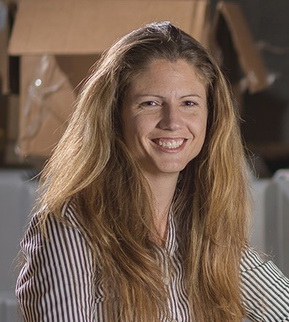
2 June 2026 - Arial Brewer
Listening to Whales: Using Bioacoustics and Behavior as a Tool for Conservation Abstract
Communication allows social species to exchange important information among group members, including collective decision-making, group coordination and movement decisions, the location of predators or prey, and markers of individual or group identity. In aquatic environments, acoustic signals are among the most effective forms of communication and are important for many species, including cetaceans. Beluga whales (Delphinapterus leucas) are highly social and vocal, yet little is known about the functionality of their social calls or how those calls may be impacted by human-generated noise. In this talk, we will explore the bioacoustics and behavior of Alaska's endangered Cook Inlet beluga whale population, which numbers around 300 individuals. We will take a deep dive into their complex vocal repertoire, as well as the behavioral, social, and environment contexts in which they produce specific calls. Further, we will explore how human-generated noise may be disrupting their communication space and ways to mitigate these impacts. This work contributes to our understanding of beluga whale ecology, communication, behavior, and the impacts threatening this endangered population.
Arial Brewer is a PhD candidate in the School of Aquatic and Fishery Sciences at the University of Washington where she is investigating the vocal behavior, genetic population structure, and epidermal microbial patterns of Alaska’s endangered Cook Inlet beluga whale population. Arial also works as a marine mammal biologist at NOAA and studies the acoustic ecology of cetaceans, primarily Cook Inlet belugas and Southern Resident killer whales. Prior to her work with NOAA and UW, Arial earned her Bachelor of Science degree in Marine Biology from the University of California, Santa Cruz and worked at Long Marine Lab, the National Marine Mammal Foundation, and Scripps Institution of Oceanography. Arial is broadly interested in the ecology, behavior, communication, and sociality of marine mammals and hopes to further the conservation efforts of endangered marine species after her PhD.
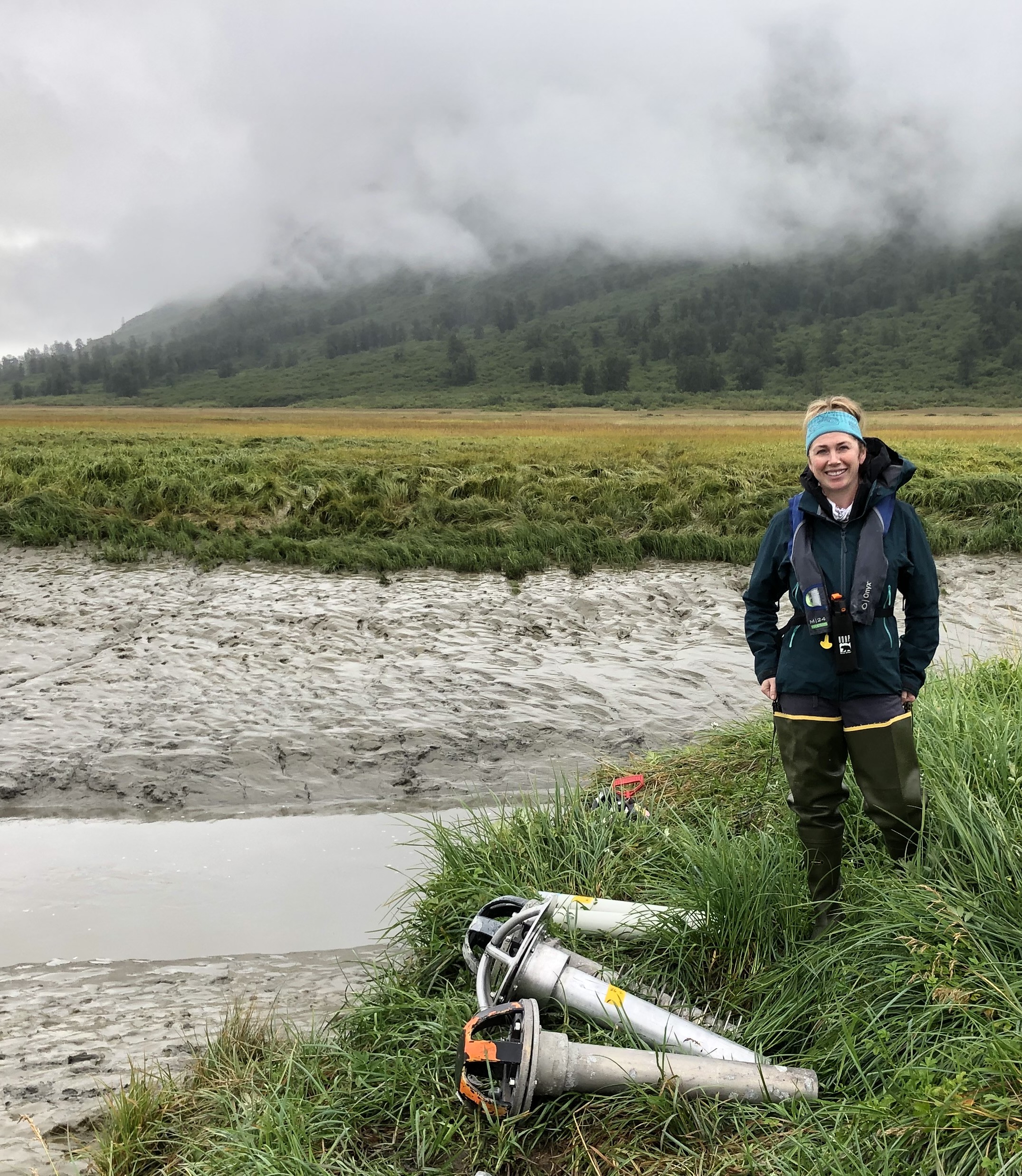

5 May 2026 - John Calambokidis
Gray whales in crisis: Observations from Washington State provide a unique view of what is happening and how they are adapting Abstract
Watch John's talk on our YouTube channel.
The overall gray whale population is facing an unprecedented challenge with a greater than 50% decline in the last 10 years. Observations in Washington State provide a unique view of different groups of gray whales from those migrating past, those who have found a very successful high-risk feeding strategy (Sounders) to supplement their diet, to the PCFG whales that feed in the Pacific NW for most of the year. Through stranding records, long-term photo-ID, sampling, and tagging, this talk will provide an important perspective on what is going on with gray whales and how some have found a way to deal with the crisis the overall population is facing.
John Calambokidis is a Senior Research Biologist and founder in 1979 of Cascadia Research Collective, a non-profit organization based in Olympia, Washington. His primary work focuses on abundance, trends, and movements of blue, humpback, and gray whales and the impacts of human activities including ship strikes, entanglement, and underwater sound. He authored two books as well more than 200 publications in journals. He served as a Director or PI for hundreds of projects such as the SPLASH Pacific-wide study of humpback whales and studies on the impact of sonar. His work has been covered on shows by National Geographic, Discovery Channel, BBC, and others. He has received awards from the American Cetacean Society (Lifetime Achievement in Marine Mammal Science in 2012), the Wildlife Society Washington Chapter (Lifetime Leadership in Conservation 2019), Evergreen State College (Distinguished Alumni of 2025) and the Olympia Rotary Club (Environmental Protection 2018).
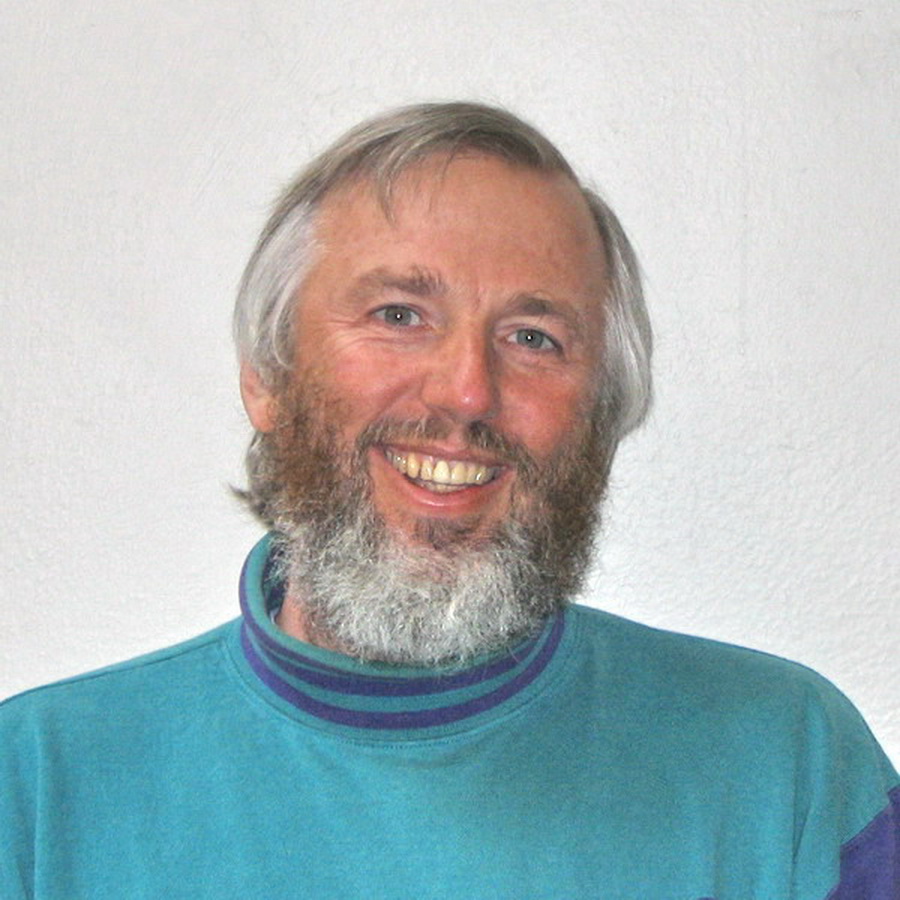

7 April 2026 - Donna Sandstrom
Working Together to Save the Whales: Stories of Hope, from Springer to the Southern Residents Abstract
In 2002 a young orca named Springer was discovered near Seattle - lost, alone and 300 miles away from home. Six months later she was rescued, rehabilitated and returned to her pod on the north end of Vancouver Island. Today she is thriving, with two calves of her own. It's the only successful orca reintroduction in history!
Donna Sandstrom will share the riveting story of Springer's rescue, and how it led her to found The Whale Trail. From 16 inaugural sites in Washington there are now more than 160 along the west coast. In 2018, Donna served as a member of Governor Inslee's Orca Recovery Task Force, where she championed solutions to reduce noise and disturbance around the endangered southern resident orcas, including a recommendation to license commercial whale-watching. Today all boaters are required to stay 1000 yards away from southern residents. A sea change is underway, against great odds, and the whales show signs of responding.
What do these stories have in common, and what can we learn from them? Donna will share the lessons she learned from Springer, and reasons for hope in a turbulent time.
Donna Sandstrom is the Founder and Executive Director of The Whale Trail, a west coast-wide series of sites to watch whales from shore. In 2002 she was a community organizer on the successful effort to return Springer, an orphaned orca, to her pod. Donna recently served as a member of Gov. Jay Inslee's Orca Recovery Task Force, and as a member of WDFW's ORCA Advisory Group.. Prior to founding The Whale Trail, she was a team and project manager at Adobe Systems.
Donna is the author of "Orca Rescue, the true story of an orphaned orca named Springer" (Kids Can Press 2021). The middle-grade non-fiction book follows Springer's story as it happened, from initial discovery through rescue, rehabilitation and reunions. Orca Rescue was a nominee for the 2025 Sasquatch Award and honored as Best Children's Book 2022 by the Science Writers and Communicators of Canada.
Donna studied psychobiology at UC Santa Cruz, and she lives in West Seattle.
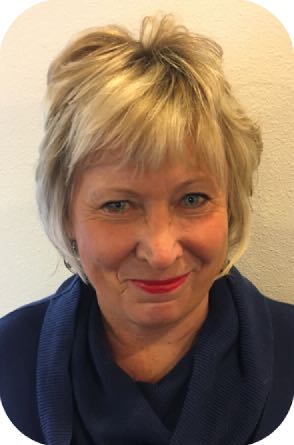
3 March 2026 - Howard Garrett
Orcas as Relational Beings Abstract
What does belonging mean for orcas — as social, cultural, and ecologically embedded beings in the Salish Sea?
What have we learned about orca personhood and emotional lives?
How can we relate to orcas in a way that goes beyond observation into real ethical connection?
How do orca social structures (pods, matrilines, dialects) challenge typical human assumptions about individuality and community?
How have narrative, myth, scientific understandings and public imagination influenced how we see and relate to orcas?
How do issues like salmon decline and habitat loss reflect our disconnections from the natural world?
If orcas could speak to us about their experience of belonging — to their family, their waters, or the planet — what do you think they would want humans to understand or change?
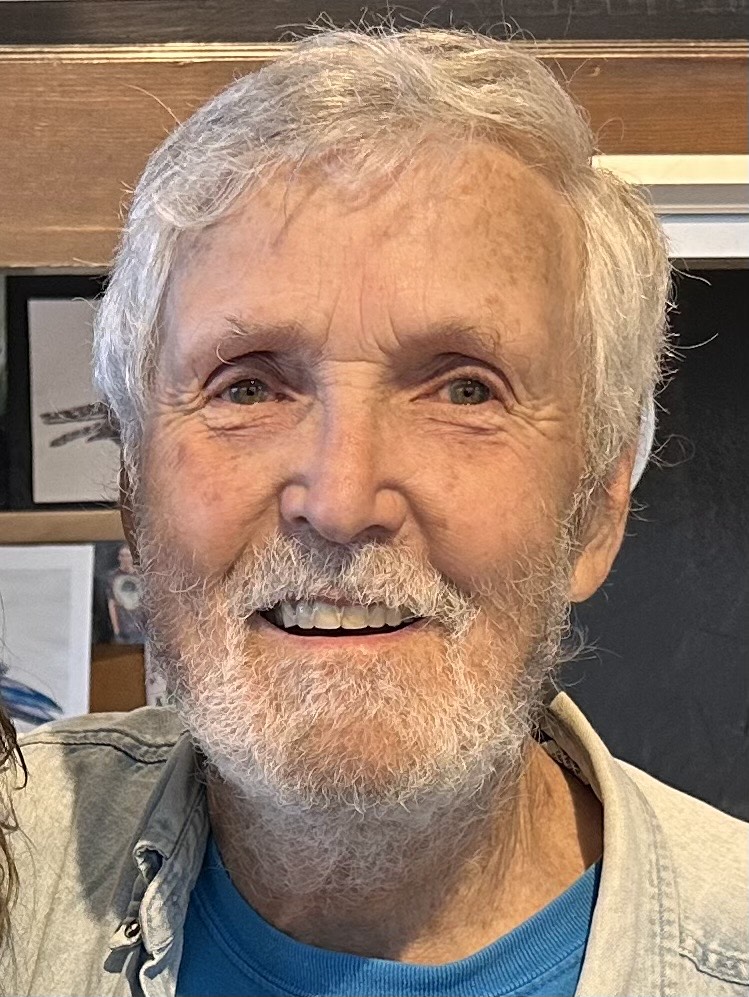
Shortly after graduating with a Sociology degree from The Colorado College in 1980, Howard began working with the Center for Whale Research on San Juan Island. In 1995 he began campaigning to return Lolita/Tokitae, a Southern Resident orca captured on Whidbey Island in 1970. In 2001 he and his wife Susan Berta founded Orca Network, a non-profit organization based on Whidbey Island, dedicated to connecting people with whales in the Pacific Northwest, and the importance of providing them healthy habitats filled with Chinook salmon.
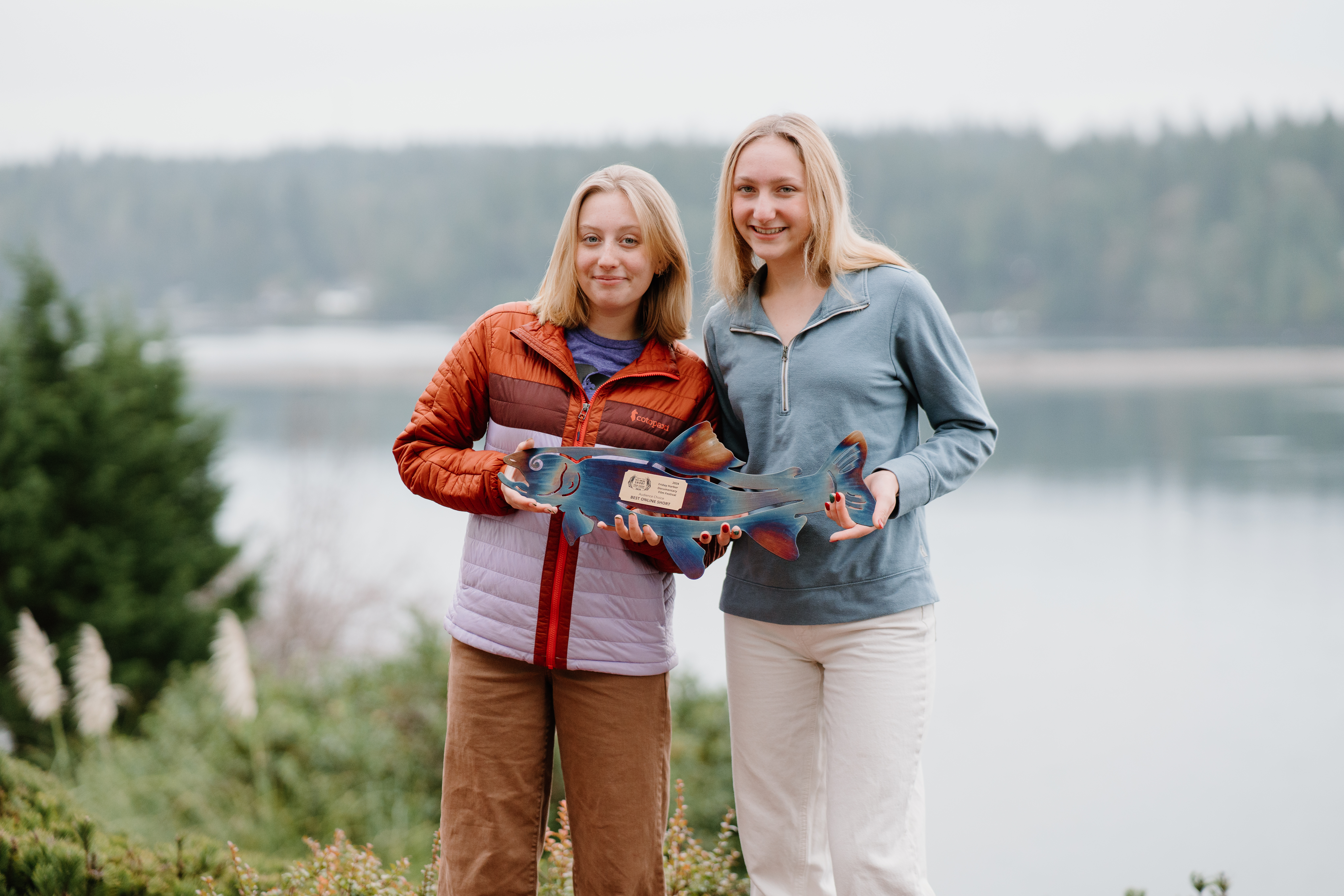
6 January 2026 - Emma and Annie Stafki
Echos of the Sound movie & Every Day for Orcas campaign Abstract
Sisters Emma (21) and Annie (17) Stafki will share their journey of Southern Resident Orca advocacy through their award-winning documentary Echos of the Sound, which tells the untold story of Hugo, the orca captured in 1968 in Vaughn Bay and sent to Miami Seaquarium. They will also discuss their Every Day for Orcas Instagram campaign (@two_girls_take_on_the_world), in which they are cold-plunging every day for a year to raise awareness for the Southern Resident Orcas. The evening includes a film screening and a Q&A session focused on their documentary and advocacy work, offering insights into their unique approach as young advocates.
Emma and Annie Stafki are a dynamic sister duo from Washington State, known for their work as filmmakers, photographers, and environmental advocates. Together they co-founded Two Girls Take on the World and created the award-winning documentary Echos of the Sound, blending their passion for storytelling with a commitment to protecting marine life.
2 December 2025 - Whitney Neugebauer and Rachael Kutz
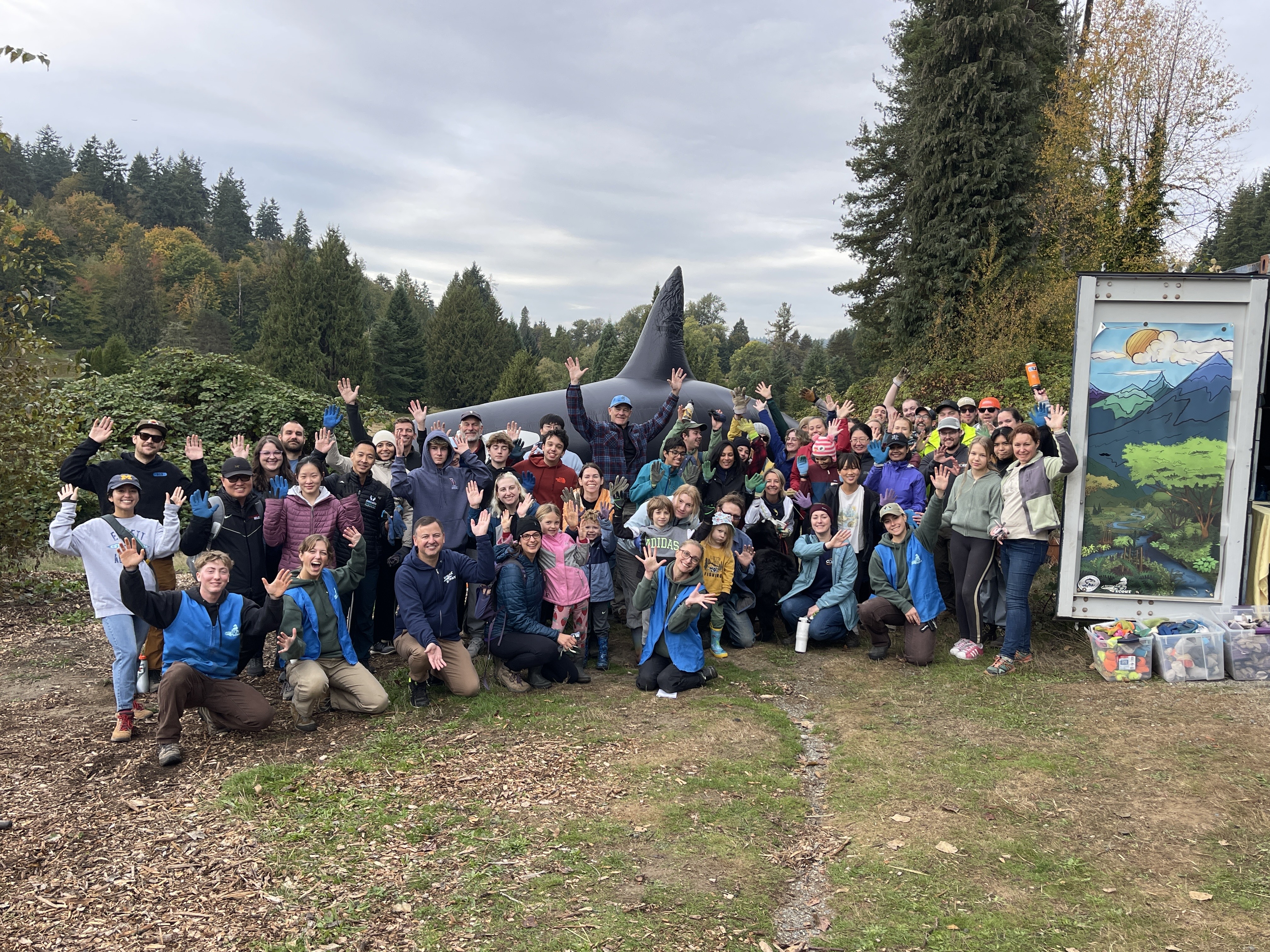
From Fairways to Fish Habitat: The Story of How a Former Golf Course Can Help Save Endangered Orcas Abstract
Once a private golf course, the former Wayne property features nearly a mile of shoreline along the Sammamish River and Waynita Creek. Now Bothell’s largest public park, an enormous opportunity now exists to restore salmon habitat, benefitting endangered Southern Resident killer whales. Whale Scout has led the community in restoration efforts for six years and counting utilizing a creative, grassroots approach that engages students and diverse audiences. Today, the future of the river is about to be determined as the community gives feedback during a master plan for the park.
Whale Scout Director, Whitney Neugebauer, completed degrees in Geology and Anthropology from Eckerd College prior to receiving her master’s degree in Marine and Environmental Affairs from the University of Washington. She went on to found Whale Scout in 2013. She lives in Bothell, Washington where she enjoys camping with her family and exploring all that the PNW has to offer.
Whale Scout Field Biologist and Education Manager, Rachael Kutz, realized her true passion was to care for wildlife any way she could through means of conservation and habitat restoration. Ever since a child, she would visit Seattle in hopes of one day living here. Now that she's accomplished that dream, she wants to do everything in her power to protect the wildlife here, both on land and in the sea. When not out with Whale Scout, she’s volunteering at the Seattle Aquarium, baking, painting, snowboarding, or caring for nearly 60 house plants!
4 November 2025 - Joe Gaydos
Health Assessments and Electronic Medical Records: Tools for Saving Southern Resident Killer Whales Abstract
Lack of available salmon, increased vessel noise and disturbance, and high levels of persistent organic pollutants hinder Southern resident killer whale recovery. In addition to addressing these threats, the population is small enough that understanding and addressing health concerns also is important for recovery. Numerous agencies and organizations have been developing tools for remotely assessing individual and population health in killer whales and are collaborating on developing an electronic health database and electronic medical records for tracking information and for assisting managers with adaptive management and action where needed.
Joe Gaydos is a respected wildlife veterinarian and the Science Director for the SeaDoc Society, a science-based marine conservation program of the UC Davis Karen C. Drayer Wildlife Health Center. For the last two decades, Joe has been working on wildlife and ecosystem conservation in the Pacific Northwest. He’s an expert on diseases that impact both human and wild animal health and works on species like seabirds, harbor seals, river otters, porpoise, and killer whales.
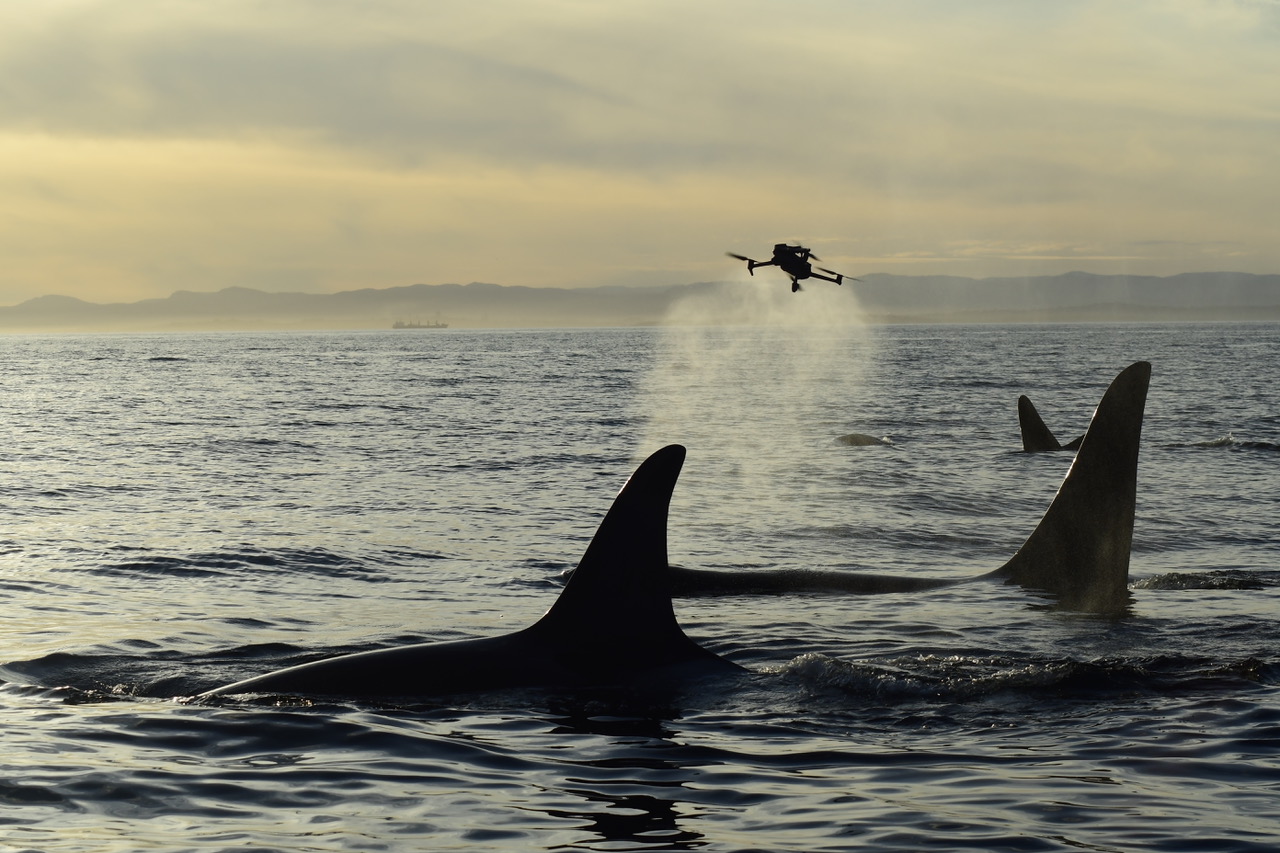
Photo by Maya Sears -collected under NMFS Permit #21348
7 October 2025 - Dr. Kim Goetz
Every Whale Counts! Scientific approaches for estimating abundance and survival of beluga whales in Cook Inlet, Alaska Abstract
The Cook Inlet beluga whale (Delphinapterus leucas) is a critically endangered, genetically distinct population found only in Alaska’s Cook Inlet. Over the past several decades, their numbers have declined dramatically due to subsistence hunting, habitat degradation, and human disturbance, falling to approximately 300 individuals by the early 2000s. This decline prompted their listing as endangered under the Endangered Species Act in 2008. Recent aerial surveys indicate a potential stabilization, with current estimates near 330 individuals; however, the population remains highly vulnerable. To better understand this population, researchers at the Marine Mammal Laboratory employ a diverse array of tools—including aerial surveys, drone surveys, acoustic monitoring, and high-resolution satellite imagery—to assess distribution, abundance, and survival. This presentation will provide an overview of these research methods and highlight the insights they offer toward a comprehensive understanding of Cook Inlet beluga whales.
Kim Goetz currently works at NOAA, Alaska Fisheries Science Center, Marine Mammal Laboratory in Seattle Washington where she focuses on the ecology, movement, distribution, and abundance of cetaceans. Kim produced the most recent abundance estimate for Cook Inlet belugas and is the pilot in command for beluga unmanned surveys. Kim is also currently co-leading a new initiative - Geospatial Artificial Intelligence for Animals (GAIA) - with the aim of creating an AI pipeline for detecting marine species in very high-resolution satellite imagery. Prior to NOAA, Kim completed her PhD at University of Santa Cruz where she studied the movement and foraging behavior of Weddell seals in the western Ross Sea Antarctica. Her research interests include Spatial ecology, marine mammal & seabird conservation, movement & behavior of animals, and science communication.